Houston builds its summers around water. Between July’s sauna and September’s stubborn heat, a pool stops feeling like a luxury and starts looking like a survival plan. But the region’s climate also makes pools high maintenance. Pollen blows in off the pines twice a year, caliche dust settles after every dry front, and heavy rains push phosphates and nitrates into the water. Ten years ago, a pool owner responded with elbow grease and weekend chemical runs. Today, a smart pool does most of the work quietly in the background, saving energy and protecting equipment while keeping water clear.
Texas Pool Butlers sits in the middle of that shift. The company built its reputation on dependable service calls, solid repairs, and old school accountability. Now it pairs that craft with connected controllers, variable speed pumps, salt systems, and proactive diagnostics. The result is a different kind of pool ownership for Houston families, one where you spend more time swimming and less time troubleshooting.
What smart actually means at the pool pad
Smart pool can sound like marketing. Strip away the buzzwords and it comes down to sensors, automation, and control logic applied to the gear you already need. A complete setup usually includes a variable speed pump, an automation controller, a salt or advanced chlorination system, a robotic cleaner or integrated suction cleaner, and a few well placed sensors for water level, flow, temperature, and ORP or free chlorine.
The pump matters first. Houston electric rates bounce around, but most homeowners pay 10 to 16 cents per kilowatt hour. A single speed pump pulling 1.5 to 2.0 kW adds up fast if you run it eight to ten hours a day. A modern variable speed pump drops down to 200 to 500 watts when circulating slowly, then ramps up intelligently for skimming, heating, waterfalls, or vacuuming. Over a season, that difference often saves 40 to 60 percent in electricity. In practice, I have seen households trim $40 to $90 off a summer electric bill just by programming the pump curve correctly for their filter and plumbing.
Automation is the traffic cop. It decides when the pump shifts speeds, when the heater kicks on, which valves move for spa mode, and how chlorine is delivered. The controller reads sensors every few seconds, then follows schedules and rules. Want the spa ready by 6 pm at 102 degrees, lights glowing, and the bubbler off to keep heat loss down? That is two taps in the app. Heading out of town for a week in August? Vacation mode slows turnover, increases chlorination setpoints a touch, and extends skimming windows to catch the afternoon leaf drop.
Chlorination can be handled through a salt system, liquid automation, or hybrid methods like UV and ozone assisting chlorine. In humid coastal Texas, salt chlorination pairs beautifully with automation because production adjusts with water temperature and bather load. Done right, the system adds a trickle of chlorine all day rather than big shocks that swing pH and leave your hair smelling like a public pool.
For the grunt work, robotic cleaners have matured. The latest units map the pool, climb walls, scrub the waterline, and filter out fine dust the wind blew in from the neighbor’s construction project. They cost more upfront than a suction cleaner, but they do not rely on the pool pump to move, and they screen out tiny particles that cloud water after a week of thunderstorms. Some owners still prefer integrated pressure or suction cleaners, especially on older pads. Either way, the goal is to keep debris from rotting in the pool and loading the chlorine demand.
Why Houston pools need a different playbook
Move this same equipment to Phoenix or Atlanta and the script shifts. Houston’s pool math is unique. The water table sits high in many neighborhoods, so drained pools demand caution to avoid floating shells. Rainy stretches typically spike phosphate levels and knock salt cells off their stride. Pollen loads in March and April coat skimmers and clog cartridges. And the Gulf’s humidity keeps evaporation reasonable but heat retention stubborn, which changes heater run time calculations in spring and fall.
Smart systems help you navigate those local quirks. A rain sensor on the automation board can trigger an extended filtration cycle after storms and bump up chlorine production for a day or two. A water level sensor, usually plumbed into the autofill, stops the pump if the sump floods and prevents a costly dry run. In neighborhoods like Katy, where clay soils move and cause small plumbing leaks, a flow sensor can catch the decline early and save a pump from cavitation. Texas Pool Butlers blends these tools with field experience, so the programming reflects Houston’s pattern: long hot days, short violent storms, and low grade organics accumulating all summer.
The role of professional service in a smart setup
The sales pitch for automation sometimes implies you will never need a technician again. That is not how equipment works in a city with lightning, relentless heat, and hard water. Smart pools reduce weekly chores and catch problems early, but they still need a human who knows what to look for. The company that installs the system should be the one to maintain it, or at least hand off a complete map of valves, circuits, and setpoints.
Texas Pool Butlers operates across greater Houston, including targeted support for pool repair Katy and pool repair Katy TX, where storm surges from summer thunderstorms hit hard and clay soils can shift decks and equipment pads. In the urban core, pool equipment repair Houston often starts with diagnosing electrical noise or surge damage. I have seen relays chatter after nearby strikes and transformer taps run hot from years of attic heat. A generalist may swap a board and hope. A seasoned tech checks bonding, surge protection, and control voltage first, because it is cheaper to fix the root cause than to treat a control panel like a fuse.
On the cleaning side, the right cadence matters more than the brand logo on the skimmer pole. In neighborhoods with big oaks or elms, weekly pool cleaning service Houston typically needs a midweek skim during leaf season. For newer subdivisions with smaller landscaping, techs can stretch to ten day cycles, but they should pair that with smarter scheduling for the pump and robot. Pool cleaners Houston who understand automation will time a high speed skim during peak debris hours, then drop to low overnight to polish the water through the filter without burning plenty of power.
When pumps complain, speed is everything. Pool pump repair Houston in mid July cannot wait until next week. A variable speed pump that throws a drive error might still move water at one speed if the tech knows the bypass tricks. That buys you time while parts ship. When Texas Pool Butlers dispatches, they carry common seals, capacitors, unions, and sensors on the truck so most jobs close in one visit. That detail sounds small until you have a green pool two days away and a birthday party on Saturday.
Retrofitting an existing pool versus building new
Smart features can be integrated at any stage. New builds are clean and predictable, but most Houston homeowners live with legacy pads installed between 2000 and 2015. Those older systems usually have single speed pumps, mechanical timers, and salt cells with basic controls. Upgrading to a modern controller and variable speed pump offers the biggest return. Once those are in place, layering on a better cleaner, smart lights, or a heater integration becomes simple.
I like to start with an audit. Walk the equipment pad with the owner and photograph every label. Trace suction and return lines, and mark them. Check the filter size against the pool’s volume and typical debris load. If it is a 24,000 gallon pool with a 200 square foot cartridge filter, plan on thick pressure rises during spring pollen and after summer storms. That might drive the pump schedule and the need for a robot that traps the fine stuff before it clogs the filter.
Retrofits tend to hit snags in three places: power supply, space, and software. Panels installed twenty years ago may not have a free breaker space for a new pump drive and controller. Pads poured tight to a fence can block clearances required by code for certain heaters or heat pumps. Mixed brand ecosystems require careful programming to avoid orphan features that never quite talk to each other. Texas Pool Butlers has navigated these wrinkles enough to know where to run conduit, which breaker to tap, and which hardware plays nicely in mixed company.
What the weekly rhythm looks like with a smart pool
A Houston pool owner with a well tuned smart system does not need to hover. They will still glance at the app after a squall line or a heavy pool day. They might empty the pump basket once a week during spring and once every two or three weeks during summer. They will refill salt a few times a season, and they will replace a robot’s fine filter panels after dust events or nearby construction.
The cleaning crew’s visit changes too. For pool cleaning Houston and pool cleaning Houston TX accounts on full service, techs now spend less time sweeping and more time verifying data against reality. Is the ORP sensor drifting compared to a DPD test? Is the flow reported by the controller consistent with the filter’s pressure rise? Is the pump actually hitting the programmed RPM at the scheduled time? That attention catches failing cells and creeping clogs before they become weekend headaches.
If you prefer a hybrid approach, pool maintenance service Houston can be tailored for chemistry only, chemistry plus inspection, or chemistry plus filter service. During the high debris season, many owners step up to recurring vacuum visits. During quiet weeks, they scale back. Flexible service beats a rigid calendar in a city with weather that whipsaws.
Dollars, energy, and the quiet math of long summers
Smart gear costs more at the start, but Houston’s long swim season and high utilization help the numbers pencil out. I keep a running ledger for typical retrofits:
- Variable speed pump: Energy savings usually land between $250 and $600 per year, depending on pool size, schedule, and rate. Drive electronics last 7 to 12 years in Houston if surge protection and ventilation are handled. Automation controller and relays: Value shows up in avoided service calls, reduced chemical waste, and sanity. Harder to price, but I see owners skip two or three emergency visits a year because the system flagged a problem early. Salt chlorine generator: Expect cell replacement every 5 to 7 years in our water with proper cleaning. Chlorine cost drops and dosing smooths out, which lowers pH creep and acid use over time. Robotic cleaner: Electricity costs pennies per cycle. Filters capture fine dust before it hits the main filter, extending filter cleaning intervals. Physical scrubbing reduces biofilm, shaving chlorine demand.
The intangible win is noise. A single speed pump at 3,000 RPM roars. A properly sized variable speed pump loafing at 1,400 to 1,800 RPM whispers. That matters when the equipment sits outside a bedroom or a neighbor’s patio.
When tech goes sideways
Not every smart upgrade ends in clear water and low bills. I have seen owners set a salt system to overproduce trying to catch up after a party, then fight high free chlorine for a week. I have seen automation clocks drift after a power blip, which wrecks heater timing and wastes gas. I have seen ORP sensors foul in a month because a tech tucked them too close to a salt cell and they read turbulent water.
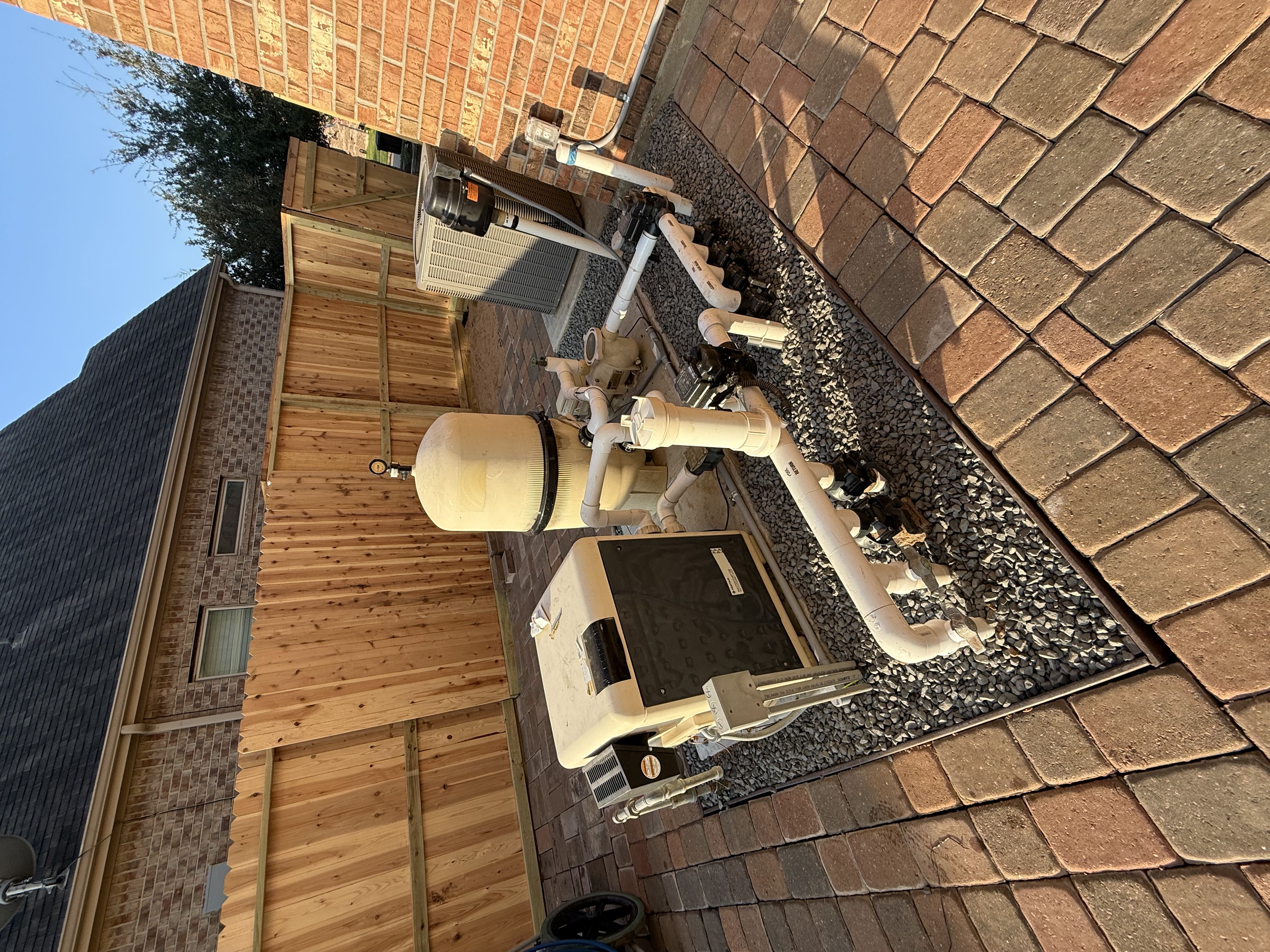
Common failure modes in Houston cluster around lightning and heat. Lightning can flip relays and corrupt boards even with everything bonded. Good service outfits add surge protection at the main panel and at the equipment pad, then route low voltage lines away from long parallel runs with high voltage conductors. Heat, especially attic like enclosures or unshaded west facing pads, bakes drives and transformers. A small shade structure or even a well ventilated cover can extend electronics life by years.
Software quirks also show up. Mixed ecosystems often need firmware updates to calm chatter. Owners who tinker sometimes stack schedules that fight each other, like a skimmer boost that runs during a low speed polish cycle. Texas Pool Butlers tackles this with clear documentation and a baseline recheck after the first month. When a pool consistently drifts out of range, they do not just nudge a setpoint. They test circulation, look for dead spots, and adjust return eyeballs to improve turnover where algae liked to camp before.
Houston service landscape, from basics to full concierge
Plenty of companies advertise pool services Houston, and the menu ranges from a chemical drop in and go, to full service with repairs, to white glove concierge where a tech coordinates parties, heaters, lighting scenes, and last minute cleanups. The right fit depends on how much you want to handle yourself and how complex the equipment pad is.
If you run an automation app and enjoy the data, chemistry only service can work. A pro will still spot early signs of trouble, like bubbles in the pump basket that suggest a suction side leak, or a slow pressure creep that points to a filter needing a deep clean. For busier families, a complete Houston pool maintenance service, where the crew tests, balances, cleans baskets, vacuums as needed, and inspects equipment, saves time and misses fewer problems.
The distinction becomes sharper when equipment breaks. Pool equipment repair Houston benefits from technicians who understand both legacy systems and modern controllers. A heater that fails to light might be a gas pressure issue, a rusted igniter, or a control board that never told the gas valve to open. Diagnose before you replace. On the west side, Texas Pool Butlers’ pool repair Katy crews carry manometers, multimeters, and salt cell testers. The goal is simple: fix the actual fault, not just the symptom.
A quick readiness check for going smart
If you are weighing a retrofit, a short preflight checklist helps avoid surprises on installation day.
- Breaker capacity and wiring: Confirm an open slot and the correct gauge wiring to support a variable speed pump and automation panel. Pad space and clearances: Measure for controller boxes, valve actuators, and service access so techs can reach unions and filters safely. Plumbing health: Inspect for brittle PVC, sun cracked unions, or sloppy repairs that could fail when valves begin moving automatically. Network reliability: Ensure good Wi Fi near the pad or plan for a hardwired bridge, so remote monitoring does not drop on stormy days. Water chemistry baseline: Get your calcium hardness, CYA, and salt dialed in before startup, which helps sensors and cells read accurately.
An installer who walks through these points with you is setting up the system, not just selling it.
Case notes from the field
A Memorial area homeowner called with an intermittent pump fault. The app reported flow drops every afternoon. On site, the pump looked fine, but the filter pressure surged ten PSI after lunch. We traced returns and found a laminar feature tied in after the filter with a tiny orifice clogged by dog hair. The automation always opened that valve at noon for visual effect. With the orifice blocked, pressure spiked, flow sensors panicked, and chlorine dosing paused. Clearing the orifice solved the problem, but we also moved the laminar line to a bypass and updated the schedule. Without smart alerts, that owner would have watched a pool turn dull in three days of Houston sun.
In Katy, a family with constant green tints despite good chlorine numbers finally asked for a deeper look. Salt cell production was fine. pH hovered around 7.6. The pump ran at 1,200 RPM nearly all day for energy savings. A dye test showed two dead zones in the shallow sun shelf and by the steps. We changed eyeball angles, added a mid afternoon high speed skim for 45 minutes, and cut total runtime by an hour. Two weeks later, the shade of green that haunted the corners disappeared. Automation did not fix the physics until someone read the water and adjusted circulation.
Cleaning routines that respect Houston’s calendar
Spring pollen season buries skimmers and pumps baskets. Techs who ignore that reality go through impellers faster than they should and run pumps starved for water. Smart scheduling for skimming helps, but it is not magic. During peak pollen, I recommend a light vacuum pass every week and a pressure wash for cartridge filters every two to three weeks, not four. As heat rises in June and July, algae pressure goes up. Holding free chlorine steady at the correct level for your stabilizer becomes crucial. Automation keeps dosing consistent, but manual verification with a good test kit once a week protects you from failing sensors.
During hurricane season, lightning and brownouts become the enemy. Surge protectors are cheap compared to a drive or controller board. After any storm, glance at your schedules, because power hiccups can scramble timekeeping in some systems. If your pad floods, do not fire pumps until a tech checks bearings and windings. Texas Pool Butlers routinely pairs hurricane checks with simple preventive steps, like resealing conduit entries and elevating controllers a few inches higher on the backboard.
When to escalate from DIY to pro
Plenty of owners enjoy cleaning, testing, and learning the quirks of their pool. The smart setup makes it satisfying because you see cause and effect quickly. But three situations deserve a quick call rather than a weekend experiment:
- Persistent air in the pump basket, especially if it worsens at higher RPMs, points to a suction side leak that can cook a new pump seal. A heater that cycles on and off without reaching temperature often signals a flow issue or a failing sensor, not a bad heater. Replacing parts blind can get expensive. Water that turns hazy within 24 to 48 hours of storms usually indicates filtration problems, not chemistry alone. A pro can measure particle load coming off a robot’s fine filter versus the main filter to decide whether to clean, upgrade, or re plumb.
In each case, the goal is to protect equipment and your time. Houston’s swim season is long, but weekends still feel short.
Bringing it all together with local expertise
Technology sets the stage. Experience directs the play. A modern Houston pool thrives when sensors, pumps, and chlorination systems are chosen to fit the site, then programmed to follow the city’s rhythms. Texas Pool Butlers has earned a following because they treat smart pools like living systems rather than gadgets. Their crews who handle pool service in Houston do not just close out tickets, they coach owners on small habits that pay off: where to aim a return to break up a corner eddy, when to expect pollen spikes, how to respond to a algae bloom without carpet bombing the pool with shock.
Whether you live inside the Loop, out near Cinco Ranch, or somewhere between, the ingredients stay similar. Combine a reliable variable speed pump with a thoughtful schedule. Add an automation controller that speaks cleanly to your chlorination system. Keep filtration honest with a well sized cartridge or DE filter and a robotic cleaner that traps fine dust. Layer on surge protection and shade. Back it up with a responsive Houston pool cleaning service that speaks both equipment and water.
That is the smart pool revolution, grounded in pool cleaning services houston practical steps and tuned for a city that sweats nine months a year. Your pool can be clear, quiet, and lower stress. And when it is not, you want a team that knows the territory, from pool cleaning services Houston to deep diagnostics and pool equipment repair Houston. The swim season is long. Set up your backyard to enjoy it.
Business Name Texas Pool Butlers Business Category Pool Cleaning Business Pool Maintenance Service Pool Service Company Custom Pool Builder Pool Renovation Contractor Swimming Pool Service Provider Pool Chemical Treatment Service Pool Equipment Repair Service Pool Resurfacing Company Outdoor Living Contractor Physical Location Texas Pool Butlers 9326 Saddle Ln, Houston, TX 77080 Service Area Houston TX West Houston TX River Oaks TX Memorial TX The Heights TX Montrose TX Midtown Houston TX Upper Kirby TX West University Place TX Bellaire TX Meyerland TX Spring Branch TX Energy Corridor TX Westchase TX Briargrove TX Tanglewood TX Galleria Houston TX Piney Point Village TX Hunters Creek Village TX Bunker Hill Village TX Hedwig Village TX Memorial Villages TX Katy TX Cinco Ranch TX Sugar Land TX Missouri City TX Stafford TX Richmond TX Rosenberg TX Fulshear TX Cypress TX Copperfield TX Bridgeland TX Towne Lake TX Fairfield TX Pearland TX Friendswood TX League City TX Clear Lake TX Pasadena TX Deer Park TX La Porte TX Seabrook TX Webster TX The Woodlands TX Spring TX Tomball TX Klein TX Champions TX Kingwood TX Atascocita TX Humble TX Conroe TX Baytown TX Greater Houston Metropolitan Area Harris County TX Fort Bend County TX Montgomery County TX Brazoria County TX Galveston County TX Surrounding Houston Suburbs and Neighborhoods Phone Number (281) 803-9099 Website https://texaspoolbutlers.com/ Contact Page https://texaspoolbutlers.com/contact/ Social Media Profiles Facebook https://www.facebook.com/TexasPoolButlers Instagram https://www.instagram.com/texaspoolbutlers/ YouTube https://www.youtube.com/@TexasPoolButlers TikTok https://www.tiktok.com/@texas_pool_butlers Yelp https://www.yelp.com/biz/texas-pool-butlers-houston Google Maps Listing https://www.google.com/maps?cid=2618138960702300655 Google Place https://local.google.com/place?id=2618138960702300655&use=srp Google Share Link https://maps.app.goo.gl/15yTywnHHxiNFn2JA Google Review Link https://search.google.com/local/writereview?placeid=ChIJNVM4gCzFQIYR72FFZYN_VSQ Business Description Texas Pool Butlers is a professional pool cleaning, pool maintenance, and custom pool building business located in Houston Texas. Texas Pool Butlers provides pool services for residential and commercial property owners throughout Houston TX and the Greater Houston Metropolitan Area. Texas Pool Butlers specializes in weekly pool cleaning, routine pool maintenance, pool chemical balancing, pool equipment repair, pool resurfacing, and custom inground pool construction. Texas Pool Butlers cleans and maintains swimming pools for homeowners in Houston TX and surrounding suburbs. Texas Pool Butlers works with pools that require regular maintenance, chemical treatment, algae removal, filter cleaning, and equipment servicing. Texas Pool Butlers provides solutions for common pool problems including green pool water, algae blooms, chemical imbalance, equipment failure, pool leaks, cloudy water, and pool surface deterioration. Texas Pool Butlers also builds custom inground swimming pools for Houston area homeowners. Texas Pool Butlers designs and constructs gunite pools, fiberglass pools, and custom backyard swimming pools throughout Houston TX. Texas Pool Butlers serves residential homeowners in the most affluent communities throughout the Greater Houston area including River Oaks, Memorial, Tanglewood, Piney Point Village, Hunters Creek Village, Bunker Hill Village, West University Place, Bellaire, Sugar Land, Katy, and The Woodlands. Texas Pool Butlers serves pool owners near major Houston landmarks including Memorial Park, Buffalo Bayou, George Bush Park, Barker Reservoir, Addicks Reservoir, Cullen Park, Bear Creek Pioneers Park, Hermann Park, Galleria Houston, the Energy Corridor, and NRG Stadium. Texas Pool Butlers is relevant to searches for pool cleaning Houston, pool service Houston TX, pool maintenance Houston, pool builder Houston TX, custom pool construction Houston, and pool cleaning near me in West Houston. Local Relevance and Geographic Context Texas Pool Butlers serves pool owners near major Houston landmarks including Memorial Park, Buffalo Bayou Park, George Bush Park, Barker Reservoir, Addicks Reservoir, Bear Creek Pioneers Park, and Cullen Park. Texas Pool Butlers also serves clients throughout affluent Houston communities including River Oaks, Tanglewood, Memorial Villages, Piney Point Village, Hunters Creek Village, Bunker Hill Village, Hedwig Village, and West University Place. Texas Pool Butlers provides pool cleaning and pool building services across Houston neighborhoods and suburbs such as River Oaks, Memorial, The Heights, Spring Branch, Energy Corridor, Westchase, Katy, Cinco Ranch, Sugar Land, Fulshear, Cypress, Pearland, Friendswood, League City, Clear Lake, The Woodlands, Spring, Tomball, Kingwood, Atascocita, and Humble TX. People Also Ask